


Do All Concussion Patients Need Neck Treatment?
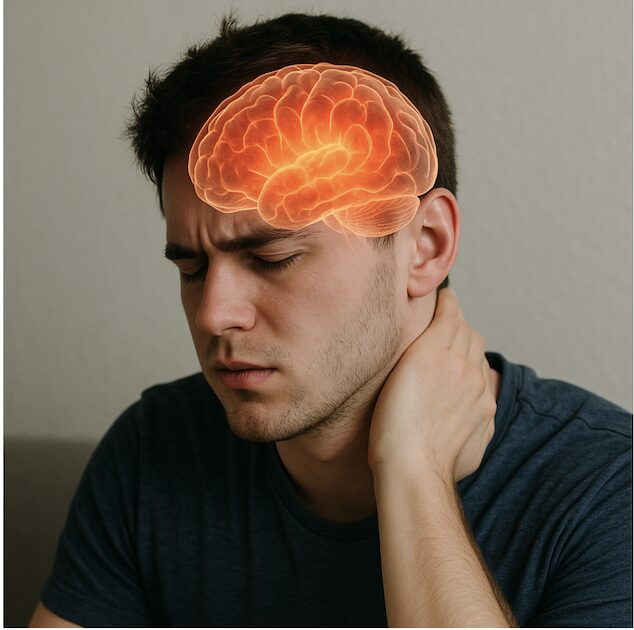
When people think about concussions, they picture a “brain injury.” And while that’s true, there’s another piece of the puzzle that often gets overlooked: your neck.
Why the Neck Matters
Many concussions happen during sports, falls, or other traumatic accidents. These events don’t just rattle the brain — they also jolt the neck. In fact, the same whiplash forces that commonly cause a traumatic brain injury inside the skull can strain the joints, muscles, and nerves in your cervical spine as well.
Here’s where it gets tricky: neck injuries and concussions share a lot of the same symptoms. Headaches, dizziness, blurred vision, poor balance, even trouble concentrating — these can come from the brain, the neck, or both. That’s why concussion recovery can be confusing.
What the Science Shows
Neck problems are common after concussion. A 2023 study in the Journal of Head Trauma Rehabilitation found that 47% of patients reported neck pain as a symptom related to their concussion.
15.4% of patients experienced more severe neck symptoms (using a neck pain symptom score). Those with more severe neck symptoms took significantly longer, on average 10 days longer, to recover.
And unfortunately, the presence of neck pain predicts a tougher recovery. A recent review showed that people who had neck pain right after their concussion were 2–6 times more likely to develop persistent post concussive symptoms.
In particular the presence of post concussive dizziness is highly associated with neck dysfunction, with as many as 80% of concussion patients with dizziness also having neck related dysfunction. So if dizziness is reported at any point after the concussion there is a very high probability that the neck has been affected.
Lack of neck pain does not mean the neck is fine
Some patients without neck pain, still have deficits in their neck that may be impacting recovery.
A 2024 study found even in concussion patients who reported minimal or no neck pain, there were measurable impairments in cervical joint position sense and mobility compared to healthy controls.
This means patients can “feel fine” in their neck yet still have proprioceptive or motor control dysfunction affecting balance, dizziness, or headache. This group of people are particularly challenging as their deficits may go unnoticed by patients, parents and clinicians.
This study provides clear experimental support for the idea that concussion patients can have underlying cervical dysfunction even in the absence of pain and underscores the importance of screening neck proprioception and mobility—not just pain—to fully assess recovery risks and rehabilitation needs.
Guidelines have changed
The 6th International Consensus on Concussion in Sport (Amsterdam, 2022) which is the go to resource for evidence-based recommendations for concussion management now recommends that patients with lingering dizziness, headache, or neck pain should get individualized rehab that includes the cervical spine.
That is a big shift amongst the leading concussion experts in the field in the last 10 years.
Quite simply the neck is emerging as a central figure in the concussion management pathway.
When a concussion is suspected, get your neck checked
Early cervical screening is essential, since neck pain is not just a symptom — it’s a predictor of delayed recovery. A thorough physical examination that tests function and mobility in addition to pain should be conducted for every concussion patient.
Not all concussion patients will need neck treatment, as some concussions recover quickly without any signs of neck involvement.
However, every concussion patient should at least have their neck properly assessed for injury and dysfunction.
If pain, mobility impairment or functional deficits are found then manual therapy (physio, chiro, osteo or massage) and rehabilitation exercises can make a critical difference on concussion recovery.
Concussions are more than a “brain injury”, don’t neglect the neck!