


The $3,000 Question: Will Whole-Body MRI or Executive Health Screens Actually Make You Live Longer?
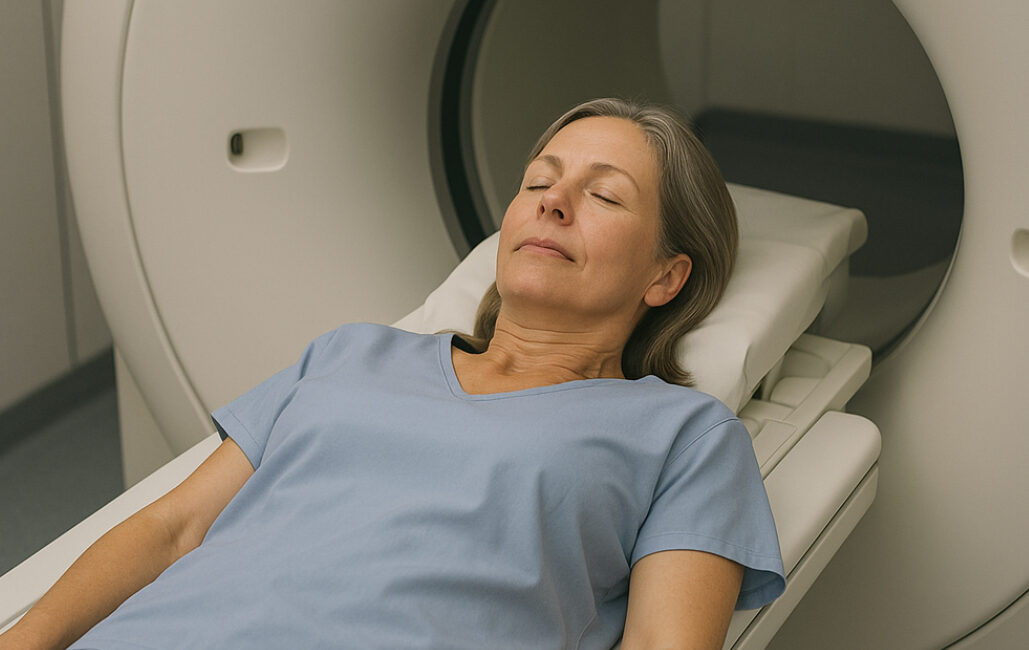
Why the hottest trends in longevity might not be the smartest investment, and what you can do to build longevity with $3000 instead.
In the past two years, we have seen a quiet boom in private “longevity diagnostics.” Clinics around the GTA now offer whole-body MRI scans for thousands of dollars, while executive medical centres promise a head-to-toe investigation of your heart, metabolism, mental health, and cancer risk.
The pitch is seductive: Detect disease and diagnose early. Get ahead of the treatment curve. Live longer.
But here’s the uncomfortable truth: neither whole-body MRI nor executive medical screens have strong evidence that they extend lifespan.
And the difference between the two services reveals something even more important, the real determinants of longevity are not what most people think.
Whole-Body MRI: The High-Tech Longevity Mirage
A whole-body MRI sounds like the ultimate safety net — one scan, no needles, no radiation, and a chance to catch “silent killers.” But large studies tell a very different story.
Whole-body MRI detects cancer in less than 1–2% of healthy people… but finds incidental abnormalities in 20–40%. Most of these “findings” are harmless cysts, nodules, shadows, or anatomical variations. But once they’re on a radiology report, the cascade begins: more scans, biopsies, specialist visits, anxiety, and sometimes unnecessary procedures. See here, here, and here.
Even more striking? There’s no evidence that whole-body MRI screening lowers mortality in average-risk adults. National radiology groups in Canada, the U.S., and Australia all advise against it for asymptomatic people. (here, here, and here).
In short: whole-body MRI is outstanding at finding things and terrible at telling us whether those things matter.
Executive Medical Screens: Closer to the Mark, but Still a longevity let down
Executive health assessments (think MedCan, Cleveland Clinic Executive Health, TELUS Health) take the opposite approach; they look for the common diseases that shorten life like cardiovascular disease, diabetes, and metabolic dysfunction.
The upside? These programs actually measure markers that matter like blood pressure, glucose control, Cholesterol and ApoB, inflammation, aerobic and muscular fitness, mental health and evidence-based cancer screening.
This approach is far more aligned with what kills people before their time.
But the best available evidence assessing the benefit and potential harm of these types of medical screenings indicates that they are unlikely to be beneficial. A recent update of a Cochrane review included 17 trials with data from more than 250,000 people. The trials assessed various combinations of blood, urine and lung function tests, electrocardiograms, cancer screening, vision and hearing assessments. It found strong evidence that general health screens at the population level have little or no effect on overall mortality.
But you may argue that your health doesn’t care about population level statistics and that more information for your own health is good, right? Potentially. However, overdiagnosis, complications related to follow-up tests, unnecessary treatments and false positives can also have detrimental psychological and physiological effects.
And we all know that one person who was given a “clean bill of health” from their executive medical screen despite being on the surface anyways far from the picture of health. The screen in these patients may have negative effects on prevention behaviour due to an overconfidence of “good health”.
Anaecdotally, these programs have helped many of our patients identify potential issues to follow up on and have motivated positive health behaviour changes, so I don’t want to come across as entirely negative on these programs.
However, ultimately, these programs have failed to demonstrate at the population level that they extend lifespan beyond what good primary care and evidence-based screening already accomplish.
So What Does Improve Longevity? And where should you spend that $ instead.
Here’s the part most people don’t want to hear: longevity isn’t purchased, scanned, or blood-drawn. It’s trained.
Study after study shows that the strongest predictors of long, healthy life are physical factors such as:
Leg strength
VO₂ max
Gait speed
Balance
Muscle mass
Physical activity volume
(See here, here, here, and here).
These are better predictors of mortality than cholesterol, blood pressure, or even smoking status in many models.
And while your executive medical test may include elements of these powerful predictors, is it the focus of their program?
Here in Burlington we do have a program that does measure these primary trainable attributes that matter. It’s called Benchmark Proactive Health which is led by Dr. Kaitlyn Link and includes body composition, leg strength testing, VO2 max testing and balance (among other things).
And the Benchmark program is a fraction of a whole body MRI or comprehensive executive medical screen.
And if you want to further put that $3000 to good use for longevity: invest in strength training, aerobic conditioning, mobility and balance training and injury prevention guided by experts who actually understand how to improve those areas.
In other words, stop searching for longevity in diagnostic technology and instead focus on training and building your own, as Dr. Peter Attia calls it, centenarian decathlon.