


Learn why EVERYONE has rotator cuff problems on MRI
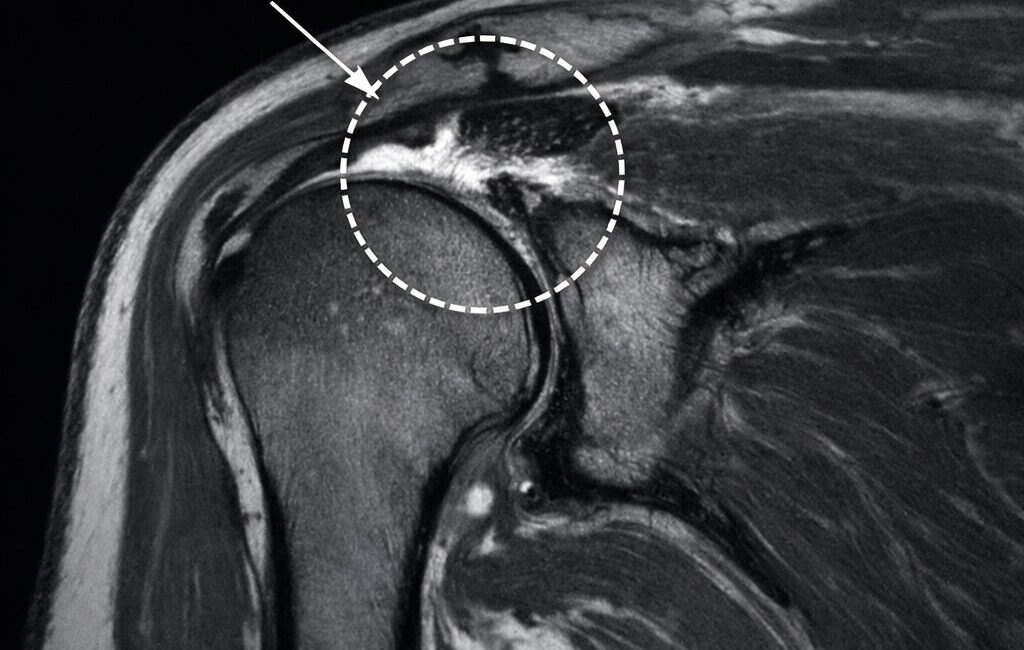
I’m about to say something pretty controversial.
As a society, we are starting to become ‘over imaged’ in terms of finding musculoskeletal problems.
Ahhhh….that felt good to put it in writing.
Why do I feel this way?
Study after study show that imaging findings alone, whether x-ray, ultrasound, or MRI, seem to have little to no correlation to how someone is actually feeling, and seems to matter less and less in terms of guiding treatment.
This isn’t a new concept.
One of most read blogs of all time was from back in 2015 (man we are getting old) titled ‘So….do I need an MRI? Why advanced imaging at times does more harm then good’
Every so often, a great study on this topic will come along and be deemed so controversial that even popular media outlets will pick it up.
Does this change the way people think?
Absolutely not!
(Sigh).
But maybe just maybe, with enough repetition of a similar topic, we will hit the proverbial tipping point and attitudes of both clinicians and patients will change.
Well, one such very important (and controversial) study was very recently published in the Journal of the American Medical Association (JAMA Internal Medicine).
So what makes this study different?
Lots!
This was a giant population based cross sectional cohort study in a completely random but representative sample of adults in Finland aged 41-76.
Essentially they took 602 random adults, gave them a history and physical evaluation of their shoulders and then did high quality 3T MRI’s on both shoulders. They had 3 radiologists independently read the MRI’s of both shoulders of each person. These doctors were completely blinded to both clinical symptoms the people may be experiencing as well as what the other radiologists found.
They then classified the rotator cuff tendons of each shoulder in 1 of 4 categories:
- Normal
- Tendinopathic changes (think tendonitis)
- Partial thickness tears
- Full thickness tears
Before we get into the results let’s ask why they even did this study and why it’s so darn important.
We know shoulder pain is extremely common. It affects 18-31% of the general population each month and is the 3rd most common reason people go and see their doctors for musculoskeletal injuries.
Issues with the rotator cuff are determined to be responsible by clinicians an astounding 85% of the time. Equally astounding is that doctors order special imaging of the shoulders 50% of initial visits, even before trying any rehab. In fact, a shocking 82% of General Practitioners view shoulder imaging as essential.
Side note – I would guess 100% of patients also view it as essential!
But is it?
Maybe this increased imaging just leads to more interventions.
Imaging guided injections have increased 46 fold since the year 2000 and rotator cuff repairs have increased between 2 and 7 fold in high income countries over the same period.
So then, the question begs…..are the imaging findings causing this rapid increase in interventions?
In this study sample, 18% of folks had current shoulder symptoms and 60% of people reported shoulder pain in the past (these findings agree with the general population at large).
Here are the findings from the study and why it caused such a kurfluffle (I’ve been trying to crowbar that word into a blog for years).
Of the 602 people that had MRI’s
- 585 had MRI abnormalities of their rotator cuffs
- 25% were tendinopathy
- 62% had partial tears and
- 11% had complete tears of their cuffs.
- Of the 70 people with full tears, 37% had full tears in BOTH SHOULDERS
- There was a clear age-related progression where those in their 40’s largely had tendinopathic changes, while those a little older had partial and complete tears starting around age 55.
- In fact, no one under 45 had a complete tear but 28% of those over 70 had complete tears.
- So if there were 602 people, that means 1204 shoulders
- Rotator cuff abnormalities were seen in 96% of those without symptoms and 98% in those with symptoms.
- Just as confusing was that the prevalence of tendinopathy and partial tears had zero difference between those with and without pain.
- Even in the 96 full tendon tears, 78% were in shoulders of people with NO SYMPTOMS.
Ok let’s take a breath and think about what the implications of this study are.
Of the total study, 99% of people aged 41 and older had at least 1 rotator cuff abnormality on MRI.
Yes…..99%.
Even partial tendon tears were present in 43% of people 45 years old or younger.
MOST rotator cuff issues were seen in people with NO PAIN, highlighting the lack of concordance between a person’s symptoms and what is found on MRI.
This completely challenges the routine attribution of shoulder symptoms to a person’s imaging.
Why?
BECAUSE EVERYONE (literally 99% of people over 41) HAVE IMAGING ISSUES OF THEIR SHOULDERS!
So as clinicians we need to shift our thinking from ‘does an abnormality exist?’ – because it almost certainly does – to ‘does the imaging abnormality plausibly explain the persons clinical findings.
This INCLUDES full tendon tears as with increasing age this is very common, and this study showed that the large majority had no pain whatsoever!
Another thing to think about as a derivative of this paper is that whole body MRI’s have zero value as far as shoulders go and will likely do much more harm then good as again, 99% of people will have a finding in their shoulder and most will have no pain!
So essentially all of you reading this would have shoulder findings if you had an MRI, whether you have pain or not. What really matters is seeing a qualified professional that is able to link any symptoms you are experiencing with MRI findings……otherwise the imaging alone really serves no purpose.