


Why Stretching Under Load Might Be the Missing Link in Your Training
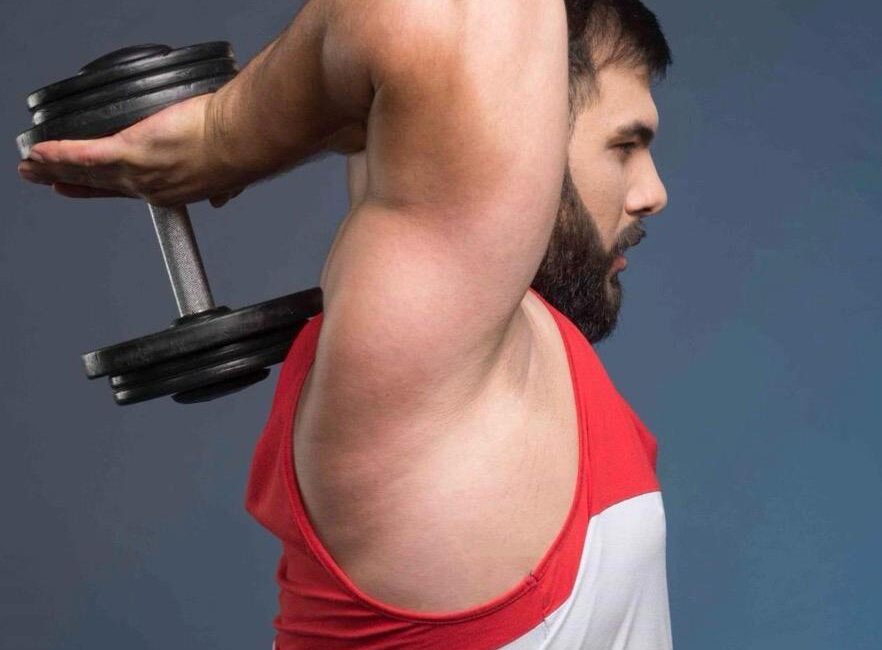
What if there was a training strategy you may not be using that could improve strength, mobility, muscle growth, and potentially reduce injury risk?
Sounds too good to be true.
But there is a training intention gaining attention in the research and rehab world.
The concept is simple:
Train muscles to build capacity at long lengths.
In other words, train muscles to produce force while in a stretched position.
Simple idea. Powerful results.
At our clinic, we commonly see hamstring, groin, calf, pec, rotator cuff, and forearm strains. A common thread? Many of these injuries occur when muscles are loaded while lengthened.
So the question becomes:
Are we adequately preparing muscles for the positions where they are most vulnerable?
I did a Therapy Thursday a couple weeks back emphasizing the same concept but wanted to reinforce the message.
Stretching Versus Stretching Under Load
Most active people already stretch.
Yet despite regular stretching, hamstrings stay tight, hips remain restricted, and muscle strains still happen.
Why?
Conventional stretching involves placing a muscle in a lengthened position and holding it there. This can improve flexibility and reduce stiffness, but research suggests much of that improvement comes from better stretch tolerance rather than major structural changes within the muscle.
Stretching still matters, but it may not be the whole story.
Why Load Changes the Equation
Recent research examining sarcomerogenesis, the addition of sarcomeres within muscle fibres, suggests that mechanical tension at longer muscle lengths may be a key driver of muscle adaptation.
A recent review by Blazevich and colleagues challenges the idea that passive stretching alone creates these changes. Instead, the more meaningful stimulus may be loading muscles while they are lengthened.
That is an important shift in thinking.
Many studies have concluded that eccentric exercise is the key to sarcomerogenesis, however Blazevich has proposed that it may be that muscles adapt best when they are asked to produce force in stretched positions. Eccentrics are not the magic rehab potion, training at long muscle lengths might be.
What does loaded stretching or training at long-lengths look like?
Long-length training is not new.
Many effective rehab and strength programs already use it such as the use of Romanian deadlifts/lengthened Nordic variations in hamstring rehab or the use of deficit calf raises in calf and achilles rehab or cossacks/copenhagen variations for groin and hip rehab.
These exercises combine mobility and strength rather than treating them separately.
Instead of merely visiting end range, they help you own it.
The bodybuilding world has also embraced the research on hypertrophy from long-length training. Resistance training performed at longer muscle length has been found to be more effective for promoting overall hypertrophy compared to training at a shorter length.
Bodybuilding programs often includes “lengthened partials”, where you only perform the stretched half of an exercise (partial range of motion), keeping the muscle under maximum tension when it is lengthened.
But a word of caution before you start doing some intense lengthened partials or advanced bodyweight stretch holds. If you are new to resistance training, start with full-range strength training and progress gradually. Mobility, stability, and movement quality still matter and the challenges for long length muscle training may be too much for a beginner resistance trainer.
The takeaway message is simple:
Think of how you can emphasize muscle length in some of your common resistance training exercises. Can you emphasize the reach and hold extended portion of a row or can you work your split squat for better control at a lower depth.
Or think outside of the traditional exercise box and create effort in some of your stretched positions.
There appears to be a unique adaptation when muscles are challenged in a fully lengthened state.
Research in this area has certainly changed the way I think about improving mobility, enhancing rehabilitation and preventing injuries for both myself and my patient care and hopefully it will change how you think about your own resistance training plan!